Did you know over 60% of home improvement projects are done by DIY fans with just a few key tools? Many think making custom furniture needs a huge, pricey workshop. But, you can get pro results with the right, quality over quantity gear.
Walking through a hardware store can be daunting. This guide makes it easier by giving you a woodworking tools list for beginners. We pick tools that give you the most bang for your buck.
Starting from simple repairs to making your first table, these best woodworking tools for beginners are your starting point. Choosing the right woodworking tools for beginners makes your projects safe and fun.
Key Takeaways
- Prioritize high-quality essentials over buying a large volume of cheap gear.
- Focus on versatile equipment that handles multiple tasks in your shop.
- Building a functional workspace does not require a massive initial financial investment.
- Select items that allow you to transition from basic repairs to custom furniture.
- Researching specific gear helps you avoid common mistakes during your first projects.
Understanding the Basics of Woodworking Tools
Starting a workshop means knowing the key tools you need. At first, the many tools out there can seem too much. But, learning about basic woodworking tools helps you get the hang of it without getting too complicated.
What Are Woodworking Tools?
These tools are like an extension of your hands. They give you the power, precision, and control to work with wood. From a simple hand plane to a high-tech power saw, each tool has its own role in making things.
Having the right basic woodworking tools lets you tackle many tasks. Choosing tools that are versatile means your initial investment will last as you get better. You don’t need a huge collection to begin; just the right tools for the job.
Importance of Choosing the Right Tools
Choosing the right tools is key for safety and getting the job done fast. Beginners often buy expensive tools that aren’t very useful at first. Knowing the difference between essential and nice-to-have tools can save you a lot of money.
Going for quality over quantity is a smart strategy for new woodworkers. Good basic woodworking tools are reliable, easy to keep up, and give better results. Picking your tools carefully sets a strong base for your growth and creativity for years.
Essential Hand Tools Every Beginner Should Own
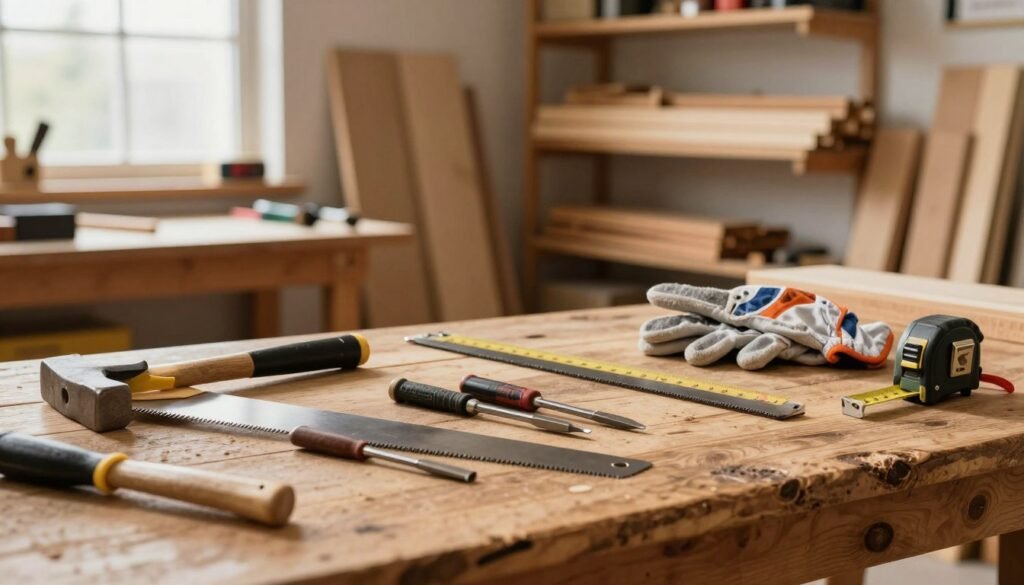
Hand tools are key for any new woodworker. They offer intimate control over wood, unlike power tools. High-quality beginner woodworking tools help you feel the wood’s resistance. This is important for mastering joinery.
“The woodworker’s hand is the ultimate tool, guided by the precision of the instruments they choose to hold.”
Handsaws: Types and Uses
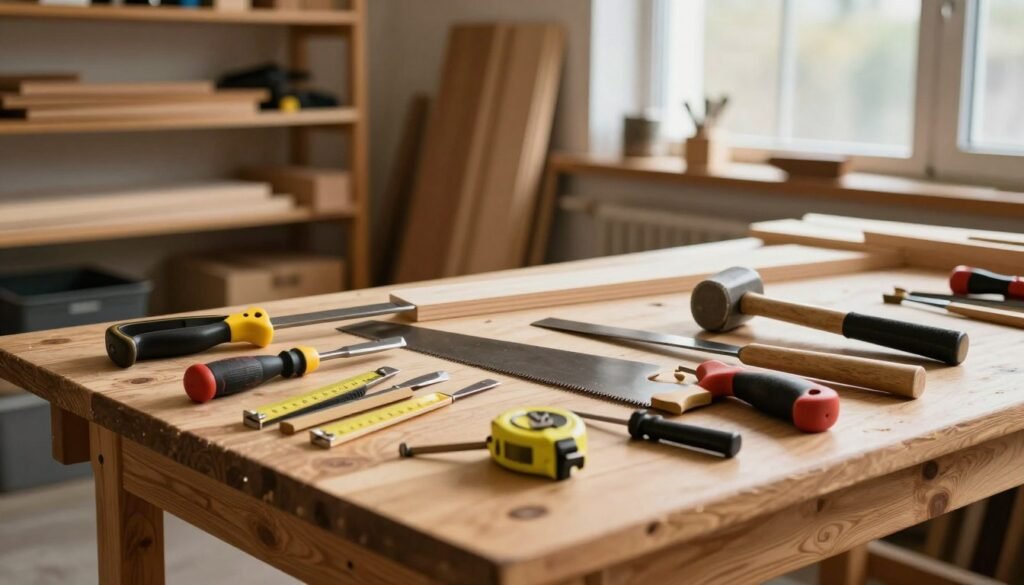
A good saw is a must-have for beginners. A Japanese pull saw is often recommended. It cuts on the pull stroke, making cuts thin and accurate.
For precise joints, a Western-style backsaw is better. Keeping your saw sharp is key for clean cuts. Always let the tool do the work, not force it.
Chisels: Making Precise Cuts
Chisels are vital for cleaning joints and adding details. A set of bench chisels from 6mm to 25mm is essential. They need a sharp edge to work well, so learning to hone them is important.
When using a chisel, keep your hands behind the edge for safety. A block plane can also help smooth edges. These tools help you achieve professional-quality work.
Measuring Tools: Ensuring Accuracy
Accuracy is key for a perfect fit. A combination square is your best friend for angles. It guides you in marking lines and checking your work.
A steel rule and a marking gauge are also essential. They help you measure consistently. Below is a summary of these tools’ main functions:
| Tool Name | Primary Function | Skill Level |
|---|---|---|
| Combination Square | Layout and checking angles | Beginner |
| Bench Chisel | Removing waste and joinery | Intermediate |
| Japanese Pull Saw | General cutting and trimming | Beginner |
| Block Plane | Smoothing and edge finishing | Intermediate |
Power Tools: A Beginner’s Introduction
Switching from hand tools to electric machines is a big step for woodworkers. Manual tools build character, but power tools bring speed and muscle to your work. They help turn raw lumber into finished furniture. Adding these machines to your workflow is a smart move for beginners.
Benefits of Using Power Tools
Power tools make your work faster. Tasks that take hours by hand can be done in minutes. This lets you focus more on design and assembly.
They also make your work consistent. Electric tools help you get uniform cuts and smooth finishes. By mastering these tools, you can work faster and make better projects.
Top Power Tools for Beginners
Start with the “Core Four” when building your woodworking tools list for beginners. These versatile machines handle most tasks for standard furniture. Investing in them early sets a solid foundation for your workshop.
The table below shows the essential functions of these must-have woodworking tools for beginners. It helps you know what to buy first.
| Tool Name | Primary Function | Best For |
|---|---|---|
| Circular Saw | Straight cuts | Breaking down large sheets |
| Drill/Driver | Boring holes/Fastening | Assembly and joinery |
| Jigsaw | Curved cuts | Intricate shapes and patterns |
| Orbital Sander | Surface finishing | Smoothing wood before staining |
Safety Tips When Using Power Tools
Always put safety first when using machinery. These woodworking tools for newbies are powerful and need your full attention. Wear safety glasses and hearing protection before starting any tool.
Never start cutting before the blade or bit reaches full speed. This prevents dangerous kickback. Keep your hands away from the cutting path and clamp your workpiece securely before starting.
Tool Organization and Storage Solutions
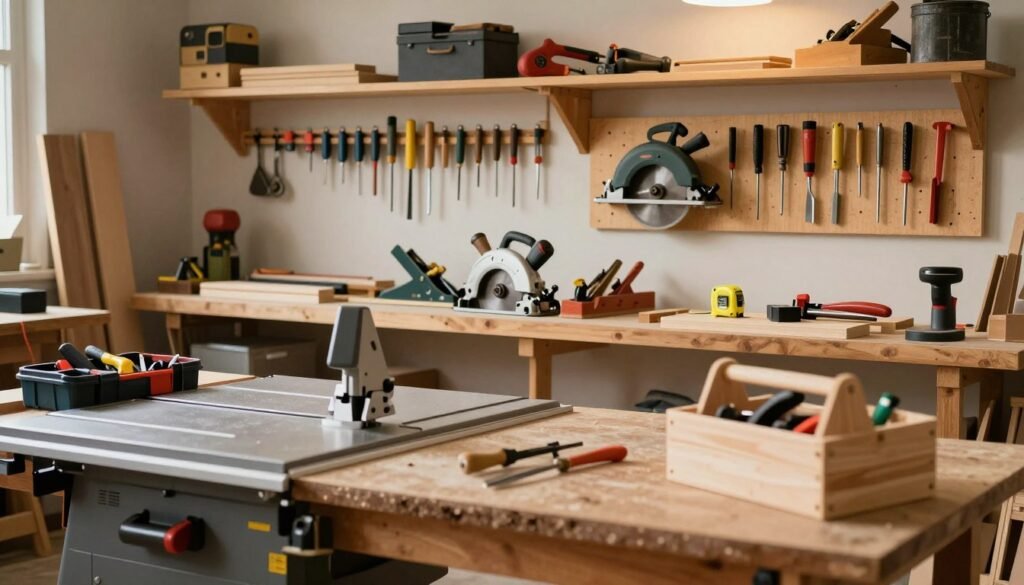
Creating a dedicated space for your tools can turn a messy garage into a professional workshop. An organized workshop is more productive. It’s important to manage your tools well to avoid damage and be ready for your next project.
Many woodworking tools for newbies are small and can get lost easily. This can cause frustration. A good storage system saves time and keeps your workspace safe. A clean space lets you focus on your work without distractions.
Workbenches: A Must-Have for Every Woodworker
The workbench is the heart of your shop, providing a solid surface for all tasks. It’s essential for sawing, sanding, or assembling. A sturdy bench keeps your workpieces secure while you make precise cuts.
Look for a bench that’s heavy and stable. A solid wood top prevents the table from moving. Adding a vise to your bench lets you tackle more projects safely.
Toolboxes vs. Tool Chests: What’s Best for You?
Deciding between a portable toolbox and a stationary chest depends on your space and mobility. A toolbox is great if you move around a lot. It’s excellent for carrying your most used hand tools.
A stationary chest is better for a fixed workshop. It offers more storage and helps organize your tools. Think about your space, mobility, tool needs, and accessibility when choosing your storage.
- Space Availability: Measure your floor area before buying large cabinets.
- Mobility Requirements: Decide if you need to move your kit around.
- Tool Volume: Count how many woodworking tools for newbies you have and plan for more.
- Accessibility: Make sure your most essential woodworking tools are easy to reach.
Wood Selection: Choosing the Right Material
Quality furniture starts with quality lumber. This makes wood selection key for beginners. Even with the best woodworking tools for beginners, your project’s quality depends on the wood. Knowing how different woods act is vital for a smooth build.
Common Types of Wood for Beginners
Softwoods like Pine are great for beginners. Pine is cheap, easy to find in South Africa, and simple to cut with basic woodworking tools.
Poplar is another good pick for beginners. It’s a hardwood that’s not too hard, making it easy to work with. Many use MDF or plywood for practice because they’re stable and cheap.
Tips for Buying Quality Wood
When at a timber yard, check the boards for straightness. Place the board on a flat surface or look down its edge. This ensures it’s not warped or twisted, making it easier to work with.
Also, watch out for excessive knots or cracks. While some knots add charm, big or loose ones can be hard to cut safely. Look for dry, clean lumber to make your project last long.
Lastly, check the wood’s moisture content. Wood that’s too wet can shrink or warp after finishing. Choosing quality materials helps your best woodworking tools for beginners work better and ensures your basic woodworking tools perform well.
Techniques and Skills to Master Early On
Starting as a hobbyist and becoming a skilled woodworker requires a strong foundation. Having the right woodworking tools for newbies is key, but knowing how to use them is more important. Learning the basics early saves time and prevents frustration with more complex projects.
Basic Woodworking Techniques
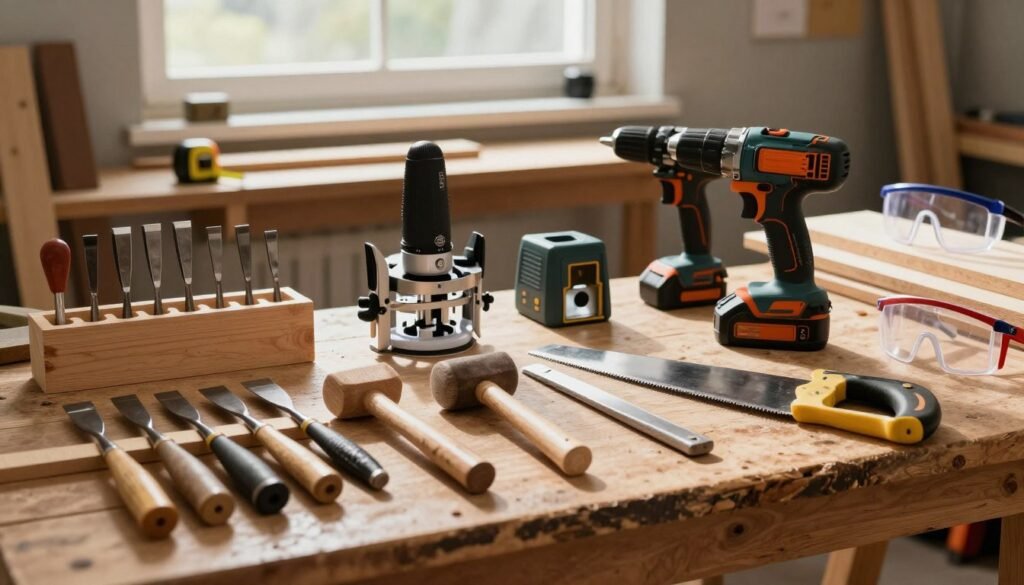
Accuracy is essential for every project. Remember to measure twice and cut once. This rule is true for all levels of experience. Learning to use a square, marking knife, and tape measure ensures your joints fit well and measurements are correct.
After mastering marking, focus on making clean cuts. Whether using a handsaw or circular saw, keeping your hand steady is critical. Practice moving your blade along a line without forcing it, letting the tool do the work.
Developing Your Craftsmanship
Improving your skills takes dedication and practice. Start with scrap wood before working on expensive materials. This way, you can test your woodworking tools for newbies without worrying about wasting valuable wood.
Always look to improve by analyzing your mistakes. Every error teaches you something new. Patience is your greatest asset as you refine your skills and learn about different wood grains.
As you become more confident, your hands will naturally get better with tools. This is how you move from being a beginner to a true craftsman. Keep challenging yourself, and your projects will improve dramatically.
Budgeting for Your Woodworking Tools
Building a professional workshop takes time and careful budgeting. It’s not wise to buy everything at once. Instead, focus on getting the right woodworking tools for beginners without spending too much.
Setting Up a Beginner’s Workshop
Start by figuring out what you want to achieve. You don’t need a huge garage to get started. A small, organized space can be perfect for your projects. Make sure your tools are easy to reach and safe to use.
Buy a solid workbench first. It’s the base for all your projects. Focus on the basics to avoid clutter and save money. This way, you can learn and grow without breaking the bank.
Finding Affordable Tools without Compromising Quality
Don’t fall for big kits with low-quality tools. Choose the best woodworking tools for beginners one by one. This way, you get tools that last and perform well.
Using the same batteries for all your cordless tools is smart. It saves money in the long run. This is key for building a collection of must-have woodworking tools for beginners.
Keep an eye out for sales or refurbished tools from trusted brands. Quality is more important than quantity. Good tools make learning safer and more fun. With smart planning, your workshop can grow with your skills.
Maintenance and Care for Your Tools
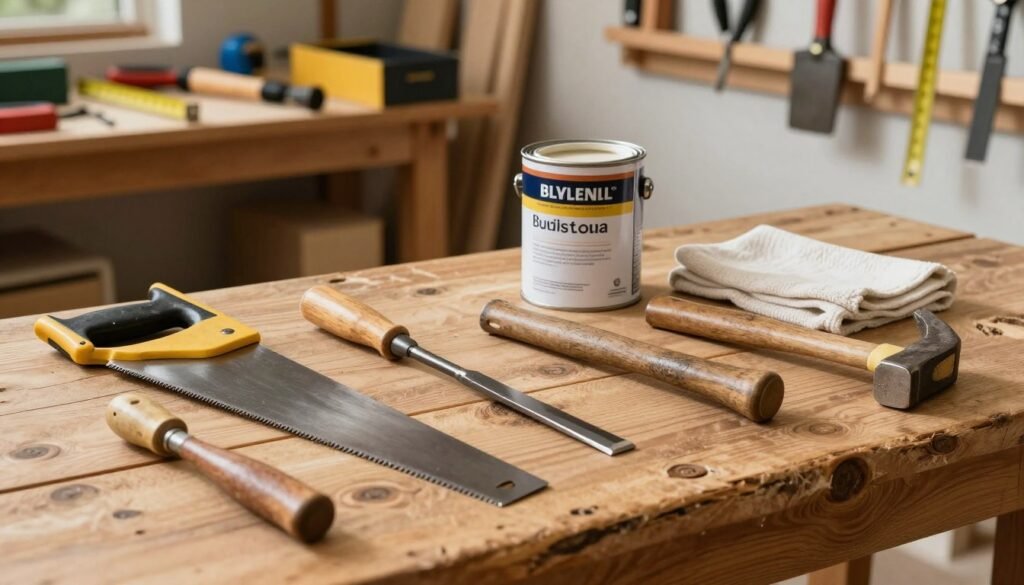
Your workshop tools need regular care to stay reliable and safe. Show respect to your essential woodworking tools to make them last longer. A well-kept shop is more efficient and safer for everyone.
Cleaning Techniques for Longevity
Dust and debris harm your equipment. Clean your machines and tools after each use. Consistency is key to avoid mechanical failure.
Moisture causes rust on metal surfaces. Use machine oil or rust inhibitor on cast iron and steel. This keeps your essential woodworking tools safe from humidity in garages or sheds.
Sharpening Tools for Optimal Performance
A dull blade is dangerous because it needs more force. Sharp tools give you better control and cleaner cuts. Sharp tools are truly the hallmark of a skilled craftsman.
Make sharpening a regular part of your routine. Use diamond stones, water stones, or sharpening jigs to keep edges sharp. Sharpening your essential woodworking tools ensures your projects show your best work and precision.
“The quality of your work is directly tied to the condition of your tools; never underestimate the power of a sharp edge.”
Online Resources for Learning Woodworking
Learning to use your woodworking tools list for beginners is easier with online mentors. The internet is like a huge library, full of safety tips and advanced techniques. These digital platforms help you avoid mistakes and build confidence in your workshop.
Websites and Tutorials for Beginners
Many websites offer structured lessons for beginners. They break down complex projects into simple steps. This way, you learn how to use every tool you have. Visual learners will find video tutorials very helpful for learning specific techniques.
Here are some popular resources to improve your skills:
- Wood Magazine: Provides detailed guides and project plans on tool maintenance.
- Instructables: A site where users share step-by-step photos of their projects.
- YouTube Channels: Many professional woodworkers share free content on using a woodworking tools list for beginners effectively.
Online Communities and Forums
Online communities offer more than just tutorials. They provide support when you face challenges. Forums let you ask questions about your tools or projects. Talking to other enthusiasts keeps you motivated and inspired.
Being part of these groups connects you with experienced makers. They often share their knowledge. Whether you’re dealing with a dull blade or choosing wood, their advice is very valuable for beginners.
Conclusion: Starting Your Woodworking Journey
Woodworking is a rewarding craft that turns wood into beautiful, useful items. Every skilled woodworker started with basic tools and a desire to learn.
Success comes from hard work and learning from mistakes. These mistakes teach you valuable lessons as you improve.
The Value of Steady Progress
Patience is key in woodworking. Take your time to learn one skill at a time. This way, you’ll make better projects and respect your materials more.
Empowerment Through Proper Equipment
Good tools are essential for beginners. Brands like Stanley, DeWalt, and Makita are great choices. They help you grow as you become more confident.
Every project you finish makes you better and more detail-oriented. Keep trying new things to stay excited about woodworking. You can create amazing pieces that show your skill and creativity.